
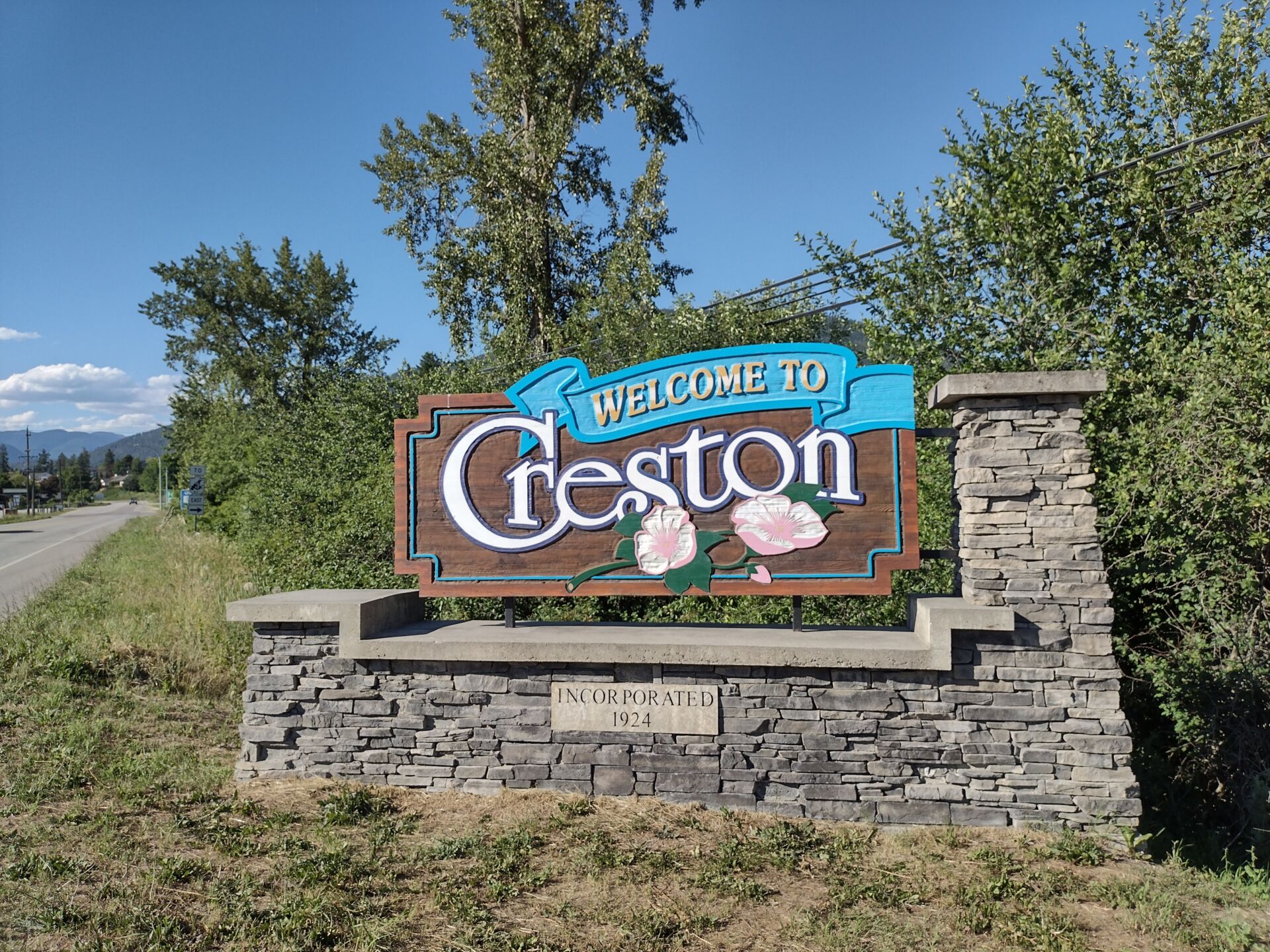

The Town of Creston has laid out its emergency management priorities for the next four years, but staff capacity and funding could make some of that work a challenge.
The Town’s Emergency Management Creston Work Plan 2026-2030 was presented to council Tuesday. The document outlines projects focused on emergency management, climate readiness and FireSmart.
The plan identified several resource gaps and limitations that may restrict some of its recommendations. Staff capacity is listed as the main constraint for plan completion, implementation, grant reporting and exercises.
It also notes that funding is often uncertain and project-based, which can limit long-term program delivery and force staff to adjust priorities based on available funding. Operational demands are also increasing due to more frequent and complex hazard events.
The Town recently completed a Hazard, Risk and Vulnerability Assessment (HRVA), which CAO Mike Moore told council will help shape several of the plans now on the schedule.
He said the HRVA will specifically inform updates to Creston’s disaster response and evacuation plans.
“We have to update our disaster response plan,” Moore said. “But again, that HRVA we just completed will inform some amendments to the existing plan that would have to be done.”
He said the Town is also at the five-year mark for its existing evacuation route plan, which was completed collaboratively with the Regional District of Central Kootenay.
“So through that HRVA, it’s given us more information to build upon that evacuation plan,” said Moore. “So I suspect that, that it’ll look quite different the next go around.”
One of the first major projects on the schedule is a business continuity plan, which needs to be in place in 2027.
Moore said the Town has a previous version, but it was largely focused on technology and didn’t go far enough in outlining how critical services would be restored after an emergency.
“It wasn’t as robust as I would like for the organization in terms of really specifics about how to get certain functions up and going again, or critical services,” he said.
The work plan also calls for an emergency information plan, a critical infrastructure protection plan, mitigation, recovery, damage assessment, debris management and rehabilitation plans over the coming years.
The critical infrastructure work will look at how the Town maintains essential services during a disaster.
“This is not just the services that we have. This is critical infrastructure and protection planning also includes how do we deliver services, what are the critical pieces that we need?” said Moore.
He used the example of keeping roads open for evacuations while ensuring Public Works has access to fuel, even if a power outage affects local fuel pumps.
“The ability to have fuel would be a part of your critical infrastructure planning and so those are the kind of things that you need to build in there,” he said.
He said the Town could eventually look at partnerships with private businesses with backup power or potentially installing its own fuel storage.
The plan also includes climate and FireSmart work, including a climate adaptation strategy, tree planting guide, urban tree strategy, fuel management and an update to Creston’s Wildfire Resiliency Plan.
The Town plans to conduct two emergency exercises each year, with after-action reports completed within 60 days and designated emergency-management staff completing required training annually.
Council received the work plan for information.
You can review it here.
Be the first to know! Don’t miss out on breaking news and daily updates in your area. Sign up to MyCrestonNowNews Alerts.