
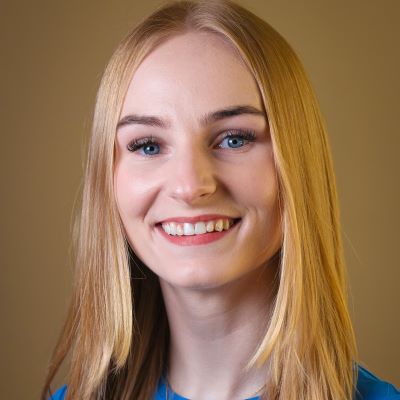
Kelly Vandenberghe is seeking a second term as the Regional District of Central Kootenay’s Area C director, saying he wants to build on the experience he has gained over the past four years representing the Creston Valley.
Vandenberghe announced his candidacy ahead of the Oct. 17 local government election. He was first elected to the RDCK board in 2022 after previously serving two-and-a-half terms as an elected official in Alberta.
Vandenberghe said his campaign is focused on concerns he has heard from residents, including rising costs, economic pressures and increasing taxes.
“I have had the privilege of representing the Creston Valley for the past four years on the RDCK board, and I am asking for the support of the community to continue this work for another term,” Vandenberghe said.
Return to core services
A central part of Vandenberghe’s platform is returning the RDCK’s focus to what he considers its core services.
Vandenberghe said the RDCK has increasingly devoted staff time and resources to non-core initiatives and pilot projects that should be reconsidered as residents face financial pressures.
“Over the past few years, you have been very clear about your concerns, rising costs of living, a shrinking local economy, and the presence and the pressure rather of increasing taxation,” he said.
“My focus for the next term is straightforward: A return to core RDCK services, stronger customer service culture, clearer communication so residents can see where every tax dollar is going and why.”
He cited rural mobility initiatives and climate-related projects as examples of non-core initiatives, saying they often lack measurable outcomes despite receiving grant funding.
“We can get a lot of grant dollars to support that type of work, but those grant dollars are still coming from the taxpayers. And without clear measurable outcomes, it’s really an exercise in experimentation and I don’t know that that’s fiscally responsible at this point in time,” he said.
He said scaling back non-core initiatives would allow staff to focus on delivering essential services and completing existing work plans.
“I think we need to kind of pull back and focus in on what core services are and our work plan that our staff constantly tells us that it’s full and they’re having a hard time managing their work plan,” he said.
“Let’s bring it back and allow them to get caught up by not having these other distractions like non-core services.”
Customer service and transparency
Another pillar of Vandenberghe’s platform focuses on improving communication between residents and the regional district.
He proposed creating a centralized customer service database where residents’ ideas and concerns could be logged, tracked and shared with the appropriate staff and area directors.
He said such a system would allow issues to be addressed earlier and give directors a better understanding of recurring concerns in their communities.
“We have the disadvantage of hearing a lot of concerns out there, but by the time we roll around to understanding what the issues are under them, they’re either significant or they’ve grown much larger than what they need to be or they’re insignificant because they’ve been dealt with,” he said.
Vandenberghe also said the RDCK could do a better job explaining how taxpayer dollars are spent.
He is proposing what he calls “narrative service-based budgeting,” which would supplement traditional budget documents with plain-language explanations describing what each service provides, why funding has changed and how success would be measured.
He said the approach would make municipal budgeting easier for residents to understand while improving accountability.
“I think that if people could read those narratives, they would answer a lot of their questions. They would have a better idea as to what municipal services are, because a lot of people struggle with where the line is between federal, provincial, and municipal, local government,” he said.
Water security
Water security is another of Vandenberghe’s campaign priorities.
He said the Creston Valley needs to better understand and protect its water resources to support future economic growth, agriculture and population needs.
“We have water resources that we kind of don’t understand how we ought to be conserving them or managing them,” he said.
He is calling for greater public engagement as the regional district develops its water sustainability plans, arguing local residents and agricultural producers should have a stronger voice in decisions affecting future water management.
“I think that’s where the public really has to get involved because there’s a lot of innovation in, for example, our agriculture sector. They’re doing a lot of things that are very smart and very innovative. And they’re doing it on their own. These are the sort of the things that needs to be brought into this whole conversation around water security,” he said.
Building on experience
Asked why several of his priorities had not already been implemented during his first term, Vandenberghe said navigating the regional district takes time.
He said the RDCK board’s mix of rural and urban directors means building support for new ideas requires patience and collaboration.
“After three and a half years, I’ve figured out ways of getting things moving forward,” he said. “I’m quite confident that I can stick-handle a lot of these things through now.”
Supporting community organizations
Vandenberghe also wants to provide stronger support for local community associations.
He pointed to his work with the Goat River Residents Association, where he said he helped modernize the group’s bylaws, constitution and financial reporting.
He said many volunteer organizations are passionate about serving their communities but could benefit from additional guidance on governance and policy.
“I saw that as an opportunity that if I could do that with other community associations, because they may not have the skills when it comes to governance and policy and bylaws and I think that I have that ability to assist them in modernizing the way they do their work,” he said.
Looking ahead
Vandenberghe said he intends to continue responding to constituent calls and emails within 24 hours, a commitment he said he has maintained throughout his first term.
He also encouraged residents to vote in October’s election and continue sharing the issues they believe are most important to the Creston Valley.
“Get out and vote. Don’t make any assumptions. I have committed to a personal policy of returning emails and calls from all constituents within 24 hours. That’s worked well for me. That’s worked well for them. And I’m proud of that. I will continue to do that,” he said.
The local government election is scheduled for Oct. 17.
Want to get your business noticed? Have you considered advertising through your local radio station? Speak to one of our sales agents and find out how radio advertising can boost your business today. Call 250-365-7600 or email Vista Radio.